For some people the thought of pre-washed and pre-distressed clothing is dismissed outright. The thought of paying as much, or sometimes even more, for something that’s already damaged does not sit well with some. Although this thought is understandable, I am convinced that, when done in the right way, it can be a beautiful exhibition of how aging can manifest itself.
But there is the hurdle: doing the distressing right is an art in itself. Much of it is done poorly, but some brands approach it with enough understanding for it to make sense.
The difference between brands doing the distressing right is usually clear. When poorly done, pre-distressing looks out of place, but sometimes it just feels right. There is no fixed formula for that. It comes down to contrast, placement, and letting the fabric do the work. Brands that get it right tend to have long experience with vintage clothing and an understanding of how garments age. When it works, the piece of clothing simply looks worn.
Below, I will showcase a few different distressing approaches by a couple of my favourite brands:
Fullcount — Expressive, but Still Believable
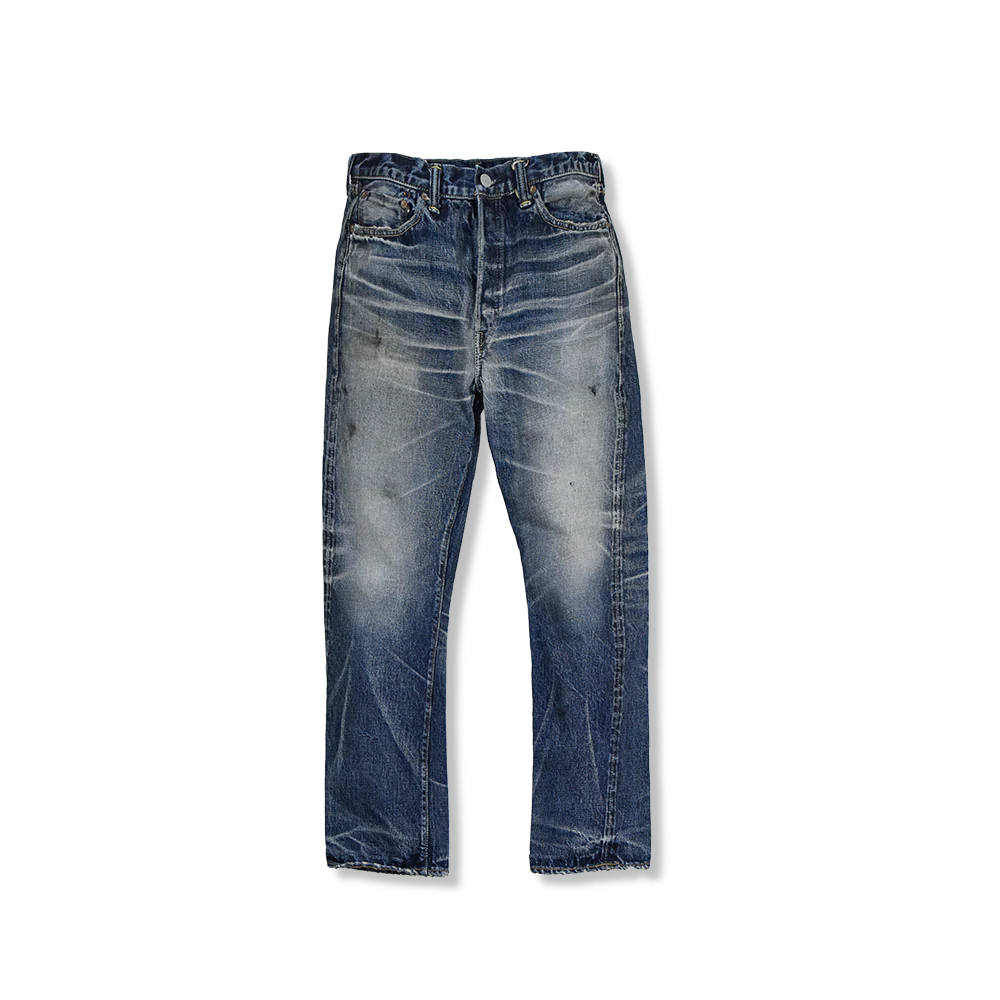
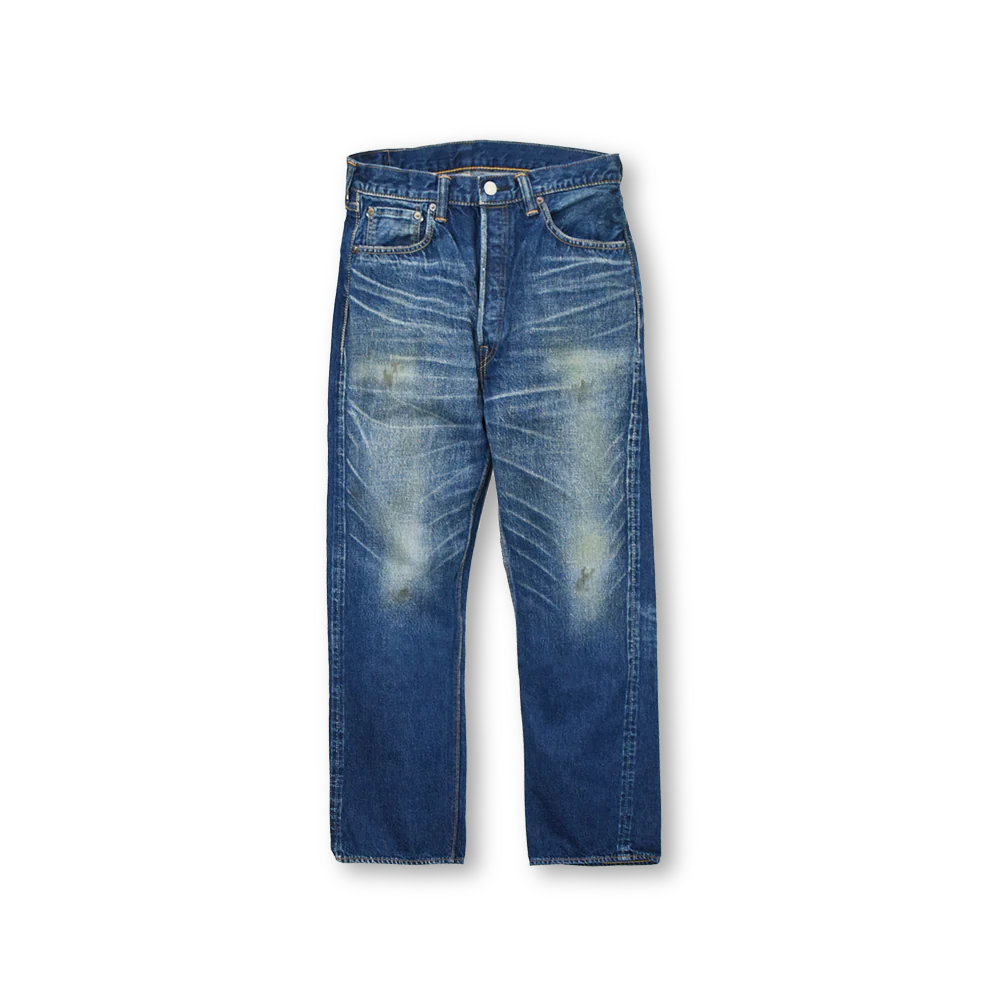
Fullcount shows how pre-distressing can work even when the fades are more pronounced. Their washes range from low to high contrast, but they still follow the structure of vintage denim rather than chasing effect for its own sake.
I own a pair of Fullcount 0105s in the Dartford wash, and they never registered to me as pre-washed. They just looked old. That balance between visible wear and familiarity is where Fullcount tends to sit. Below are two different jeans from Fullcount. Same denim but different types of fades.
Warehouse & co. — “Vintage” fades
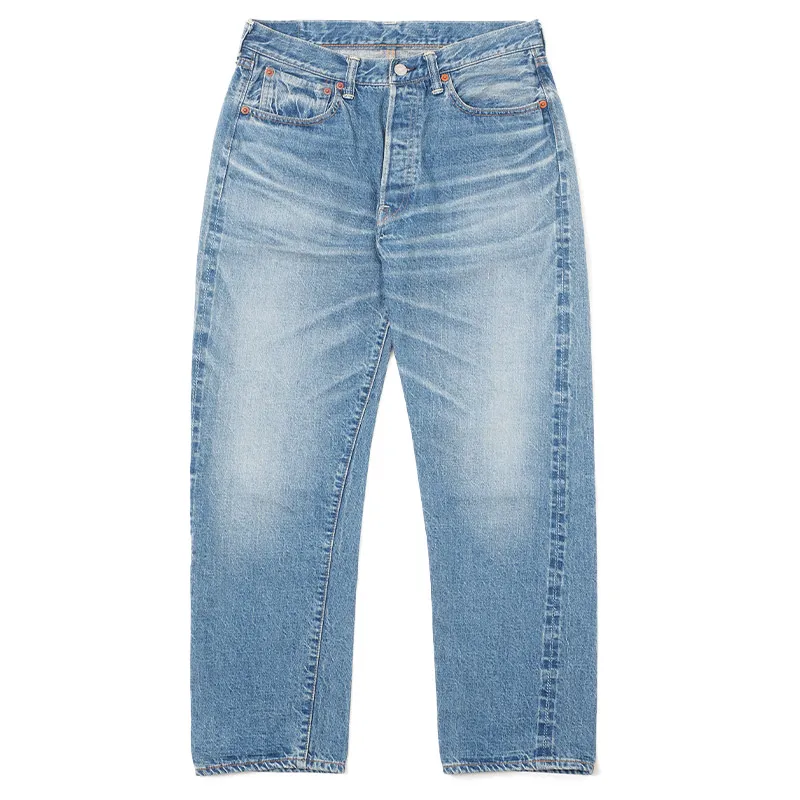
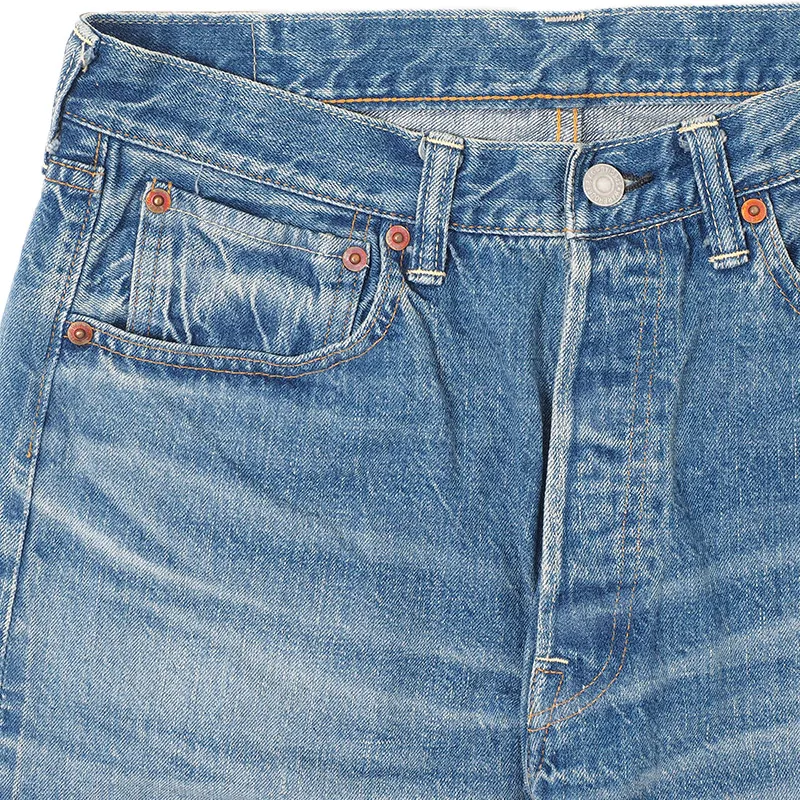
When Warehouse does distressing, they do it more quitely in perspective to Fullcount. Their second-hand wash keeps the contrast low and wear subtle, closer to how denim tends to look after long-term, unremarkable use.
The result feels calm and unforced. Where Fullcount allows itself more variation, Warehouse stays conservative and consistent.
RRL — Exaggerated on Purpose
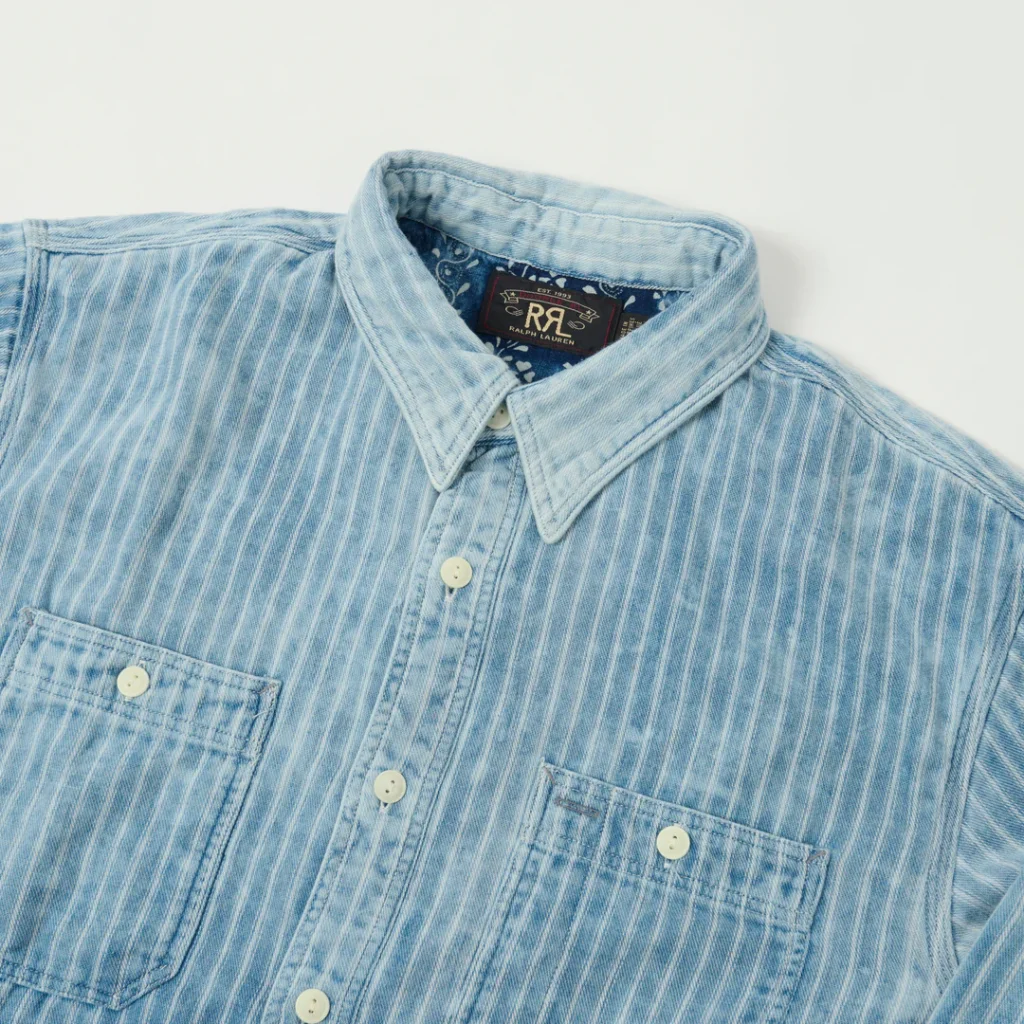
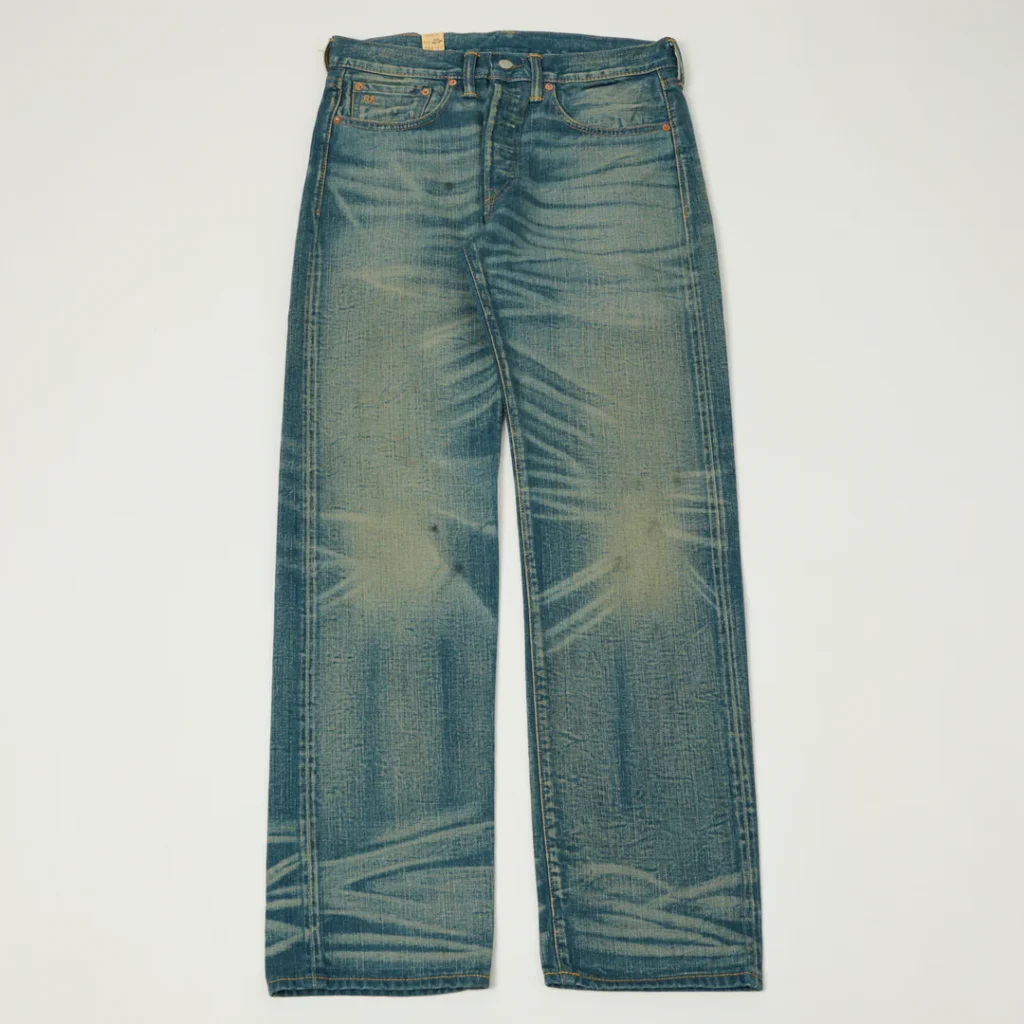
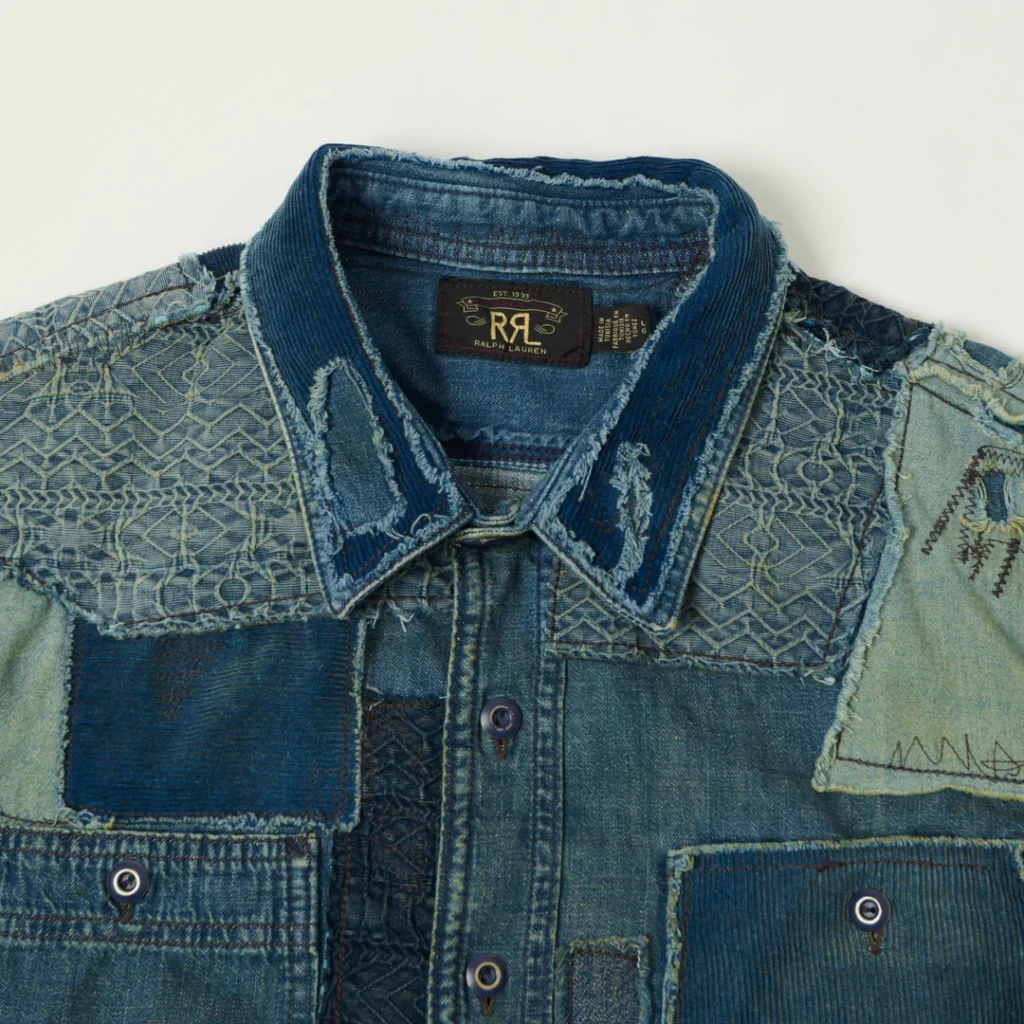
RRL has a totally different approach of distressing than Fullcount and Warehouse. The distressing is pushed far and is not meant to look achievable. The wear is exaggerated by design.
These are fades, damage patterns, and repairs that would be nearly impossible to create through normal wear, and a genuine vintage equivalent would be hard to find and likely expensive. Rather than aiming for realism, RRL builds a setting where this kind of wear feels intentional. Not everyone can pull it off, but those that do, look badass.
That approach extends beyond denim. Heavy patchworking and visible repairs are common, along with distressing applied to jackets, chinos, and other workwear fabrics. The garments suggest multiple periods of wear layered onto one another. It is excessive, but controlled enough to avoid feeling careless.
visvim — Wear in stages
Visvim takes yet a different approach than the brands above. Many of their core garments are offered in fixed stages: clean, damaged, and crash.
These are not effects added for impact. They are different stages of wear applied to the same garment or fabric, reflecting a consistent understanding of how clothing changes over time. Done almost like a science project.
This approach is not limited to denim. The same logic is applied to leather jackets, nylon bombers, chino trousers, and other materials that age in very different ways. On fabrics like their long-staple cotton chino cloth, this makes it easier to see how the material softens, dulls, and breaks in over time. Even at the more extreme end, the distressing stays measured. Visvim has gone as far as burying garments and even boots in mud as part of their finishing process, but that is a topic best left for another post.
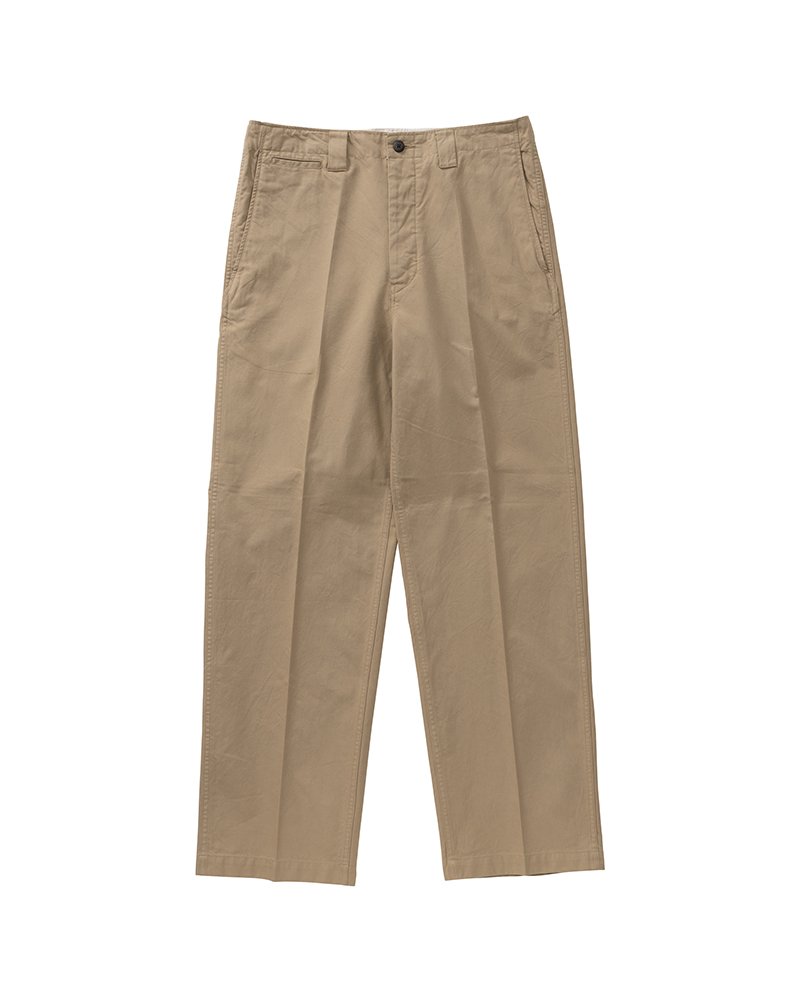
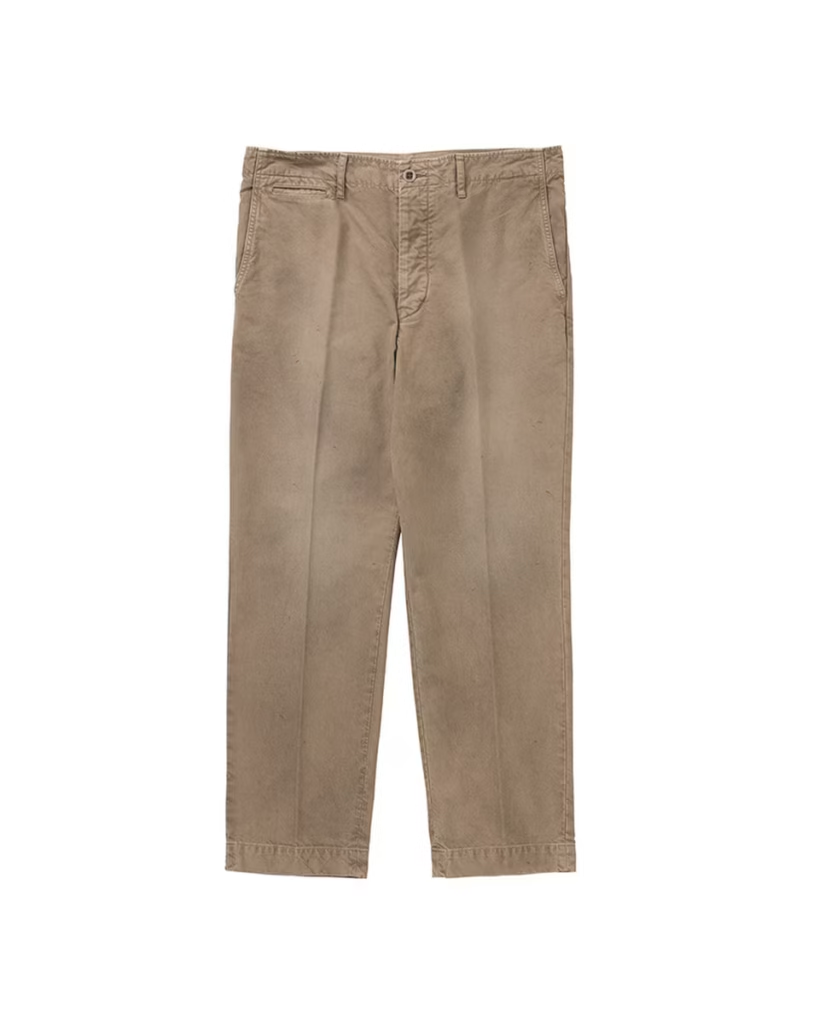
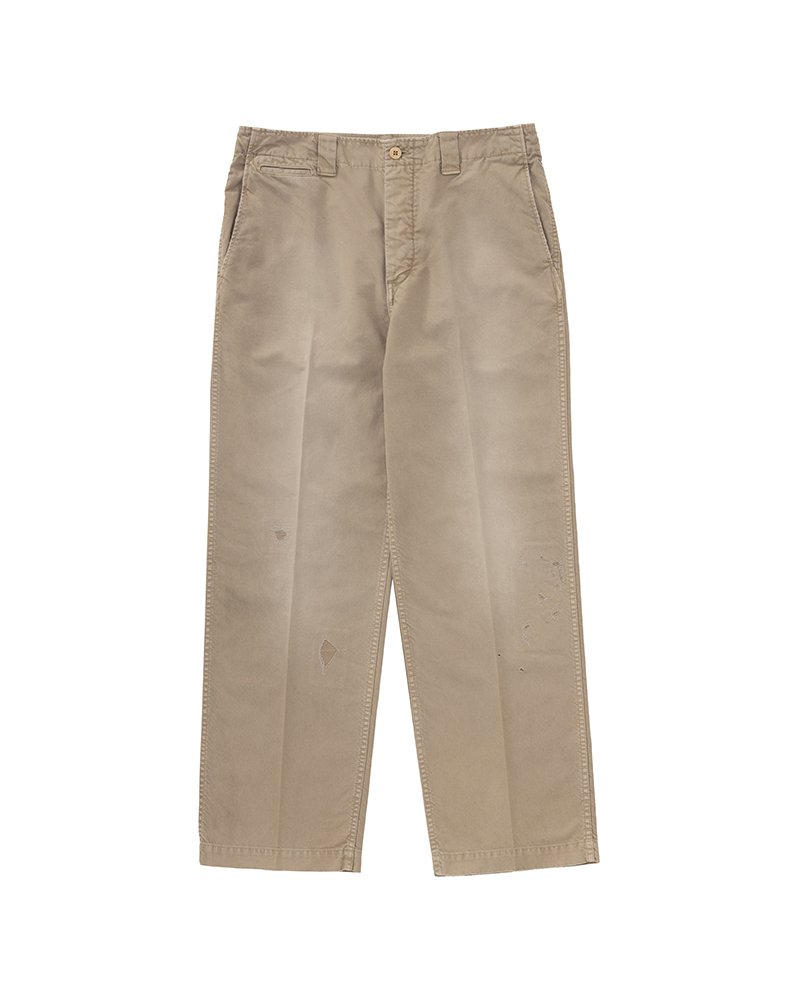
One thing these brands have in common is that they usually offer the same garment both clean and distressed. Even if you prefer to put in the wear yourself, the treated versions act as a reference. They show how a particular fabric and dye are likely to age over time.
This gives the customer a sense of how a newly purchased garment might look after years of use. For brands working outside of fast fashion, it offers a way to show how better materials and construction tend to age rather than simply wear out.
Final thoughts
Pre-distressing is not inherently bad. It is simply easy to get wrong. When brands truly understand how garments age, pre-washed clothing can feel considered rather than gimmicky. You don’t have to like every execution, and you don’t have to wear it yourself. But when it’s done with care, there is a place for it.